

Oshkaabewisag means helpers.
This is the team driving our work


Each person on the team carries responsibilities grounded in Anishinaabe teachings, relationship, and care. Together, they support the work of Anishinaabek Guardians from the 7th Fire in distinct but interconnected ways.
Meet our Oshkaabewisag
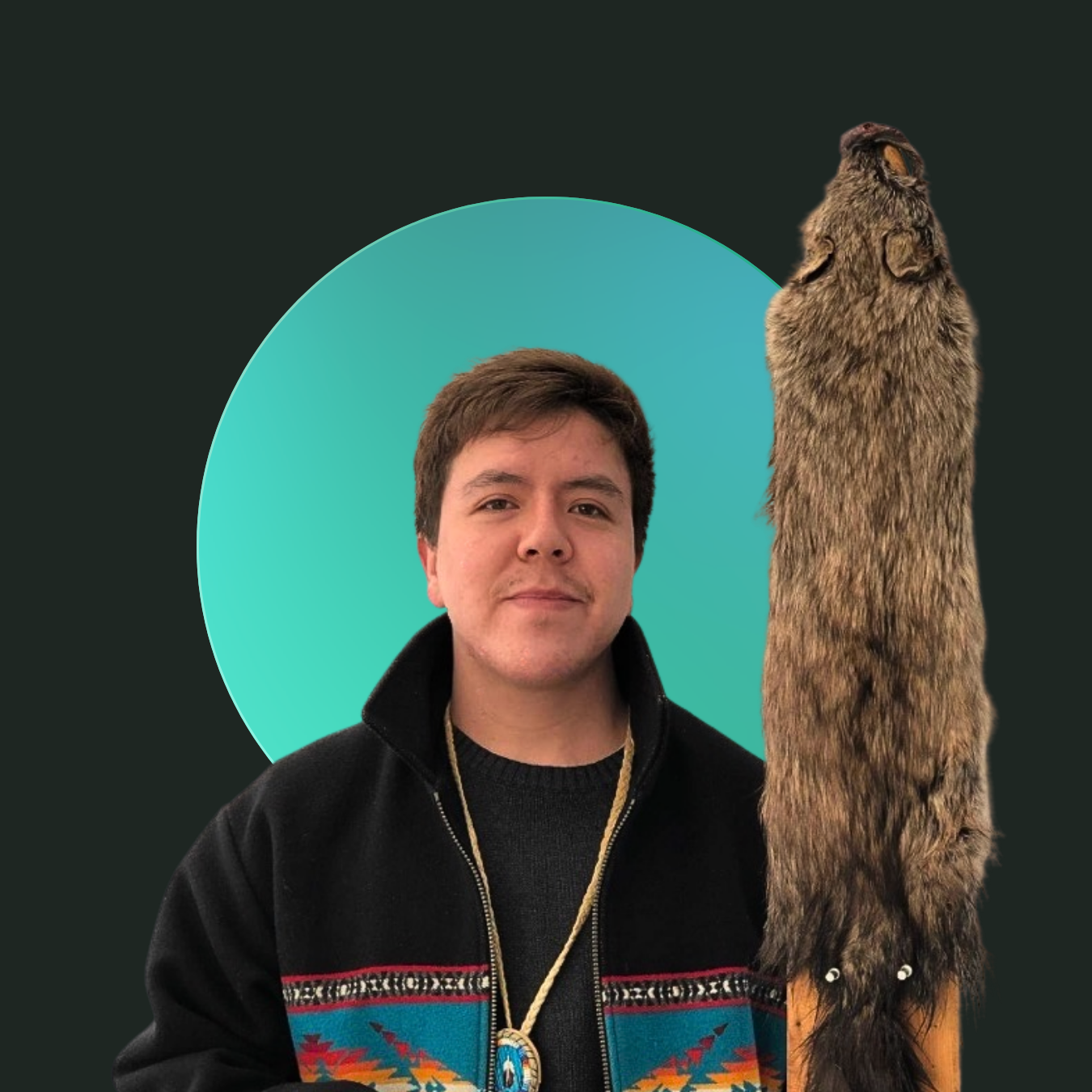
Waabshkigan Shane Monague
Waabshkigan Shane Monague is a two-spirited Ojibway and Potawatomi Anishinaabe from the Turtle Clan. He is a member of Beausoleil First Nation, and serves as the Organizational Lead for Anishinaabek Guardians from the 7th Fire. Waabshkigan utilizes his diverse background in non-profit operations, community engagement, and digital media and focusses on the organizational development, project planning, and event coordination to help guide the team. Waabshkigan is from the time of the 7th Fire.
Founder, Organizational Lead
-
Waabshkigan Shane Monague is the Organizational Lead for Anishinaabek Guardians from the 7th Fire (AG7F), where he supports Indigenous-led environmental stewardship and community capacity-building grounded in traditional Anishinaabek systems, responsibility, and intergenerational knowledge. His work focuses on restoring and strengthening the relationships between people, land, water, and governance that sustain Indigenous stewardship and collective wellbeing.
He serves as an Oshkaabewis, supporting ceremonial and community responsibilities alongside his professional work. He is also a second-generation Indian Residential School Survivor, and this intergenerational history has shaped his life, responsibilities, and commitment to cultural continuity, community wellbeing, and responsibility to future generations.
From a young age, Shane has been involved in Indigenous youth leadership and community governance. He served on local school and youth councils in his home community and became active in grassroots Indigenous movements, learning directly from Knowledge Holders and Indigenous women leaders who emphasized land stewardship, water protection, and collective responsibility. As a youth participant in the Our Water – Our Future (Water I <3 You) project led by the Centre for Indigenous Environmental Resources (CIER), Shane travelled across so-called Canada in hia early years to build practical skills in water protection, leadership, and advocacy—an experience that helped solidify his path toward climate and environmental work rooted in Indigenous law and responsibility.
As part of an Indigenous youth internship, Shane also spent time in Colombia, where he worked alongside Muisca Indigenous communities, supporting community-led initiatives and learning from their approaches to land stewardship, cultural continuity, and Indigenous governance. This experience deepened his understanding of shared Indigenous struggles and responsibilities across Turtle Island and Abya Yala, and reinforced the importance of international Indigenous solidarity grounded in local leadership and self-determination.
With over a decade of experience in Indigenous youth leadership, community organizing, and climate and environmental initiatives, Shane has contributed to youth and community advisory councils at the local, provincial, national, and international levels. His work spans Indigenous governance spaces, policy-adjacent processes, and global advocacy forums, including the UN Permanent Forum on Indigenous Issues and UN climate negotiations. Across these spaces, he centers Indigenous youth voices and traditional leadership, prioritizing meaningful engagement and the respectful inclusion of Indigenous peoples and knowledge systems in the development of long-term, sustainable solutions.
Professionally, Shane also works as a Digital Media Specialist with Sacred Earth, supporting partnerships with Indigenous communities across Turtle Island through digital storytelling, communications, and technical strategy. In this role, he works alongside an Indigenous-led team advancing a just energy transition toward a sustainable future where Indigenous peoples’ treaty, inherent, and internationally reaffirmed rights are upheld in so-called Canada.
Across all areas of his work, Shane is committed to strengthening youth-led systems change, advancing Indigenous stewardship and self-determination, and building bridges between generations and peoples. His leadership is grounded in Anishinaabek teachings, accountability to community, and responsibility to the generations yet to come.
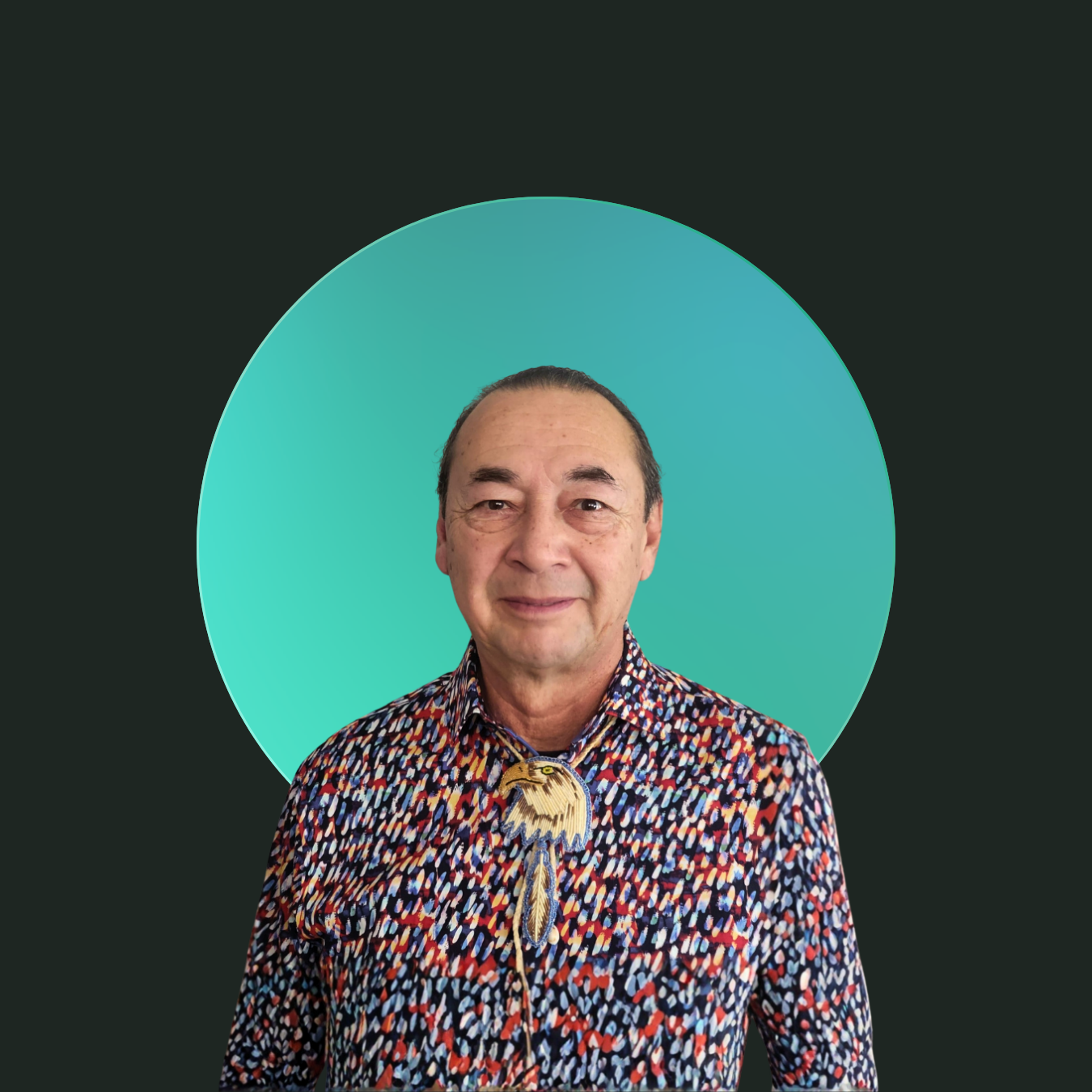
Migiziwinini Nicholas Deleary
Migiziwinini Nicholas Deleary is the Traditional Knowledge Carrier, Cultural Systems Lead for Anishinaabek Guardians from the 7th Fire, carrying Anishinaabeg knowledge systems through art, history, and cultural reclamation. A multidisciplinary artist, professor, and recognized leader within the Little Shell Society, his work centers birchbark scrolls, ancient visual systems, and the restoration of cultural context to Indigenous knowledge and material culture.
Migiziwinini is from the time of the 6th Fire.
Traditional Knowledge Carrier, Cultural Systems Lead
-
Nicholas Deleary is the Traditional Knowledge Carrier and Cultural Systems Lead for Anishinaabek Guardians from the 7th Fire (AG7F). Over the years, he has built a multidisciplinary practice rooted in Anishinaabeg knowledge systems, artistic traditions, and cultural reclamation. His work bridges art, history, and living cultural systems, with a focus on restoring continuity between ancestral knowledge and contemporary practice.
In recent years, Nicholas has focused on re-engaging historical Anishinaabeg artifacts through artistic reinterpretation. This includes the study and redesign of a woven basswood bag dated to the 1760s, photographed from a museum collection in the United States. Elements of this bag’s original design were incorporated into his paintings—such as Lizards & Frogs—as part of a deliberate process of reclaiming Anishinaabeg geometric forms.
Prior to the 1830s, Anishinaabeg visual culture was predominantly geometric in design. With the later emergence of floral aesthetics—likely influenced by European textile traditions—these forms adapted over time. Nicholas also points to the often-overlooked influence of Indigenous aesthetics on European design movements, including Parisian fashion. He sees this as an important area of inquiry for emerging Anishinaabe scholars exploring how Indigenous visual systems have shaped global design history.
As a professor and studio artist, Nicholas brings over forty years of experience across five primary artistic disciplines: clay, fiber, metal, stone, and two-dimensional arts, including illustration, drawing, oil painting, and pigment-making. He has taught comprehensive art history courses centered on Indigenous artistic traditions spanning over 5,000 years, with a focus on the Great Lakes region and broader contextual analysis of North, Central, and South American Indigenous works.
In his role as a cultural consultant and knowledge keeper, Nicholas has worked with museums and institutions across Canada, the United States, and Europe. These include the Smithsonian National Museum of the American Indian in Washington, D.C., the Heye Museum in New York, the Royal Ontario Museum, and numerous tribal museums and cultural institutions. He has been engaged to identify, date, and geographically locate unlabeled Indigenous objects held in institutional collections—restoring cultural context and voice to ceremonial and artistic items long held without community guidance.
Nicholas’s life’s work has centered on birchbark scrolls, petroforms, mound sites, and petroglyphs. He has collected and studied over 130 birchbark scrolls, working in collaboration with Little Shell Society knowledge holders and Sundance leaders across Turtle Island. These scrolls contain layered, three-dimensional forms of Anishinaabeg writing and serve as primary historical evidence and living cultural archives.
As a recognized leader within the Little Shell Society, Nicholas understands himself as an archivist of Anishinaabeg written memory. This work is not solely academic; it is ceremonial, restorative, and essential to the survival of Anishinaabeg knowledge systems.
He believes we are only beginning to collectively understand the extraordinary value of these ancient visual forms as tools for teaching future generations. These are, as he describes them, ancient data carried forward in new ways. His commitment is to ensure that Anishinaabeg cultural records continue to live, teach, and speak forward for generations to come.
Our work is strengthened through intergenerational guidance, cultural continuity, and shared responsibility.
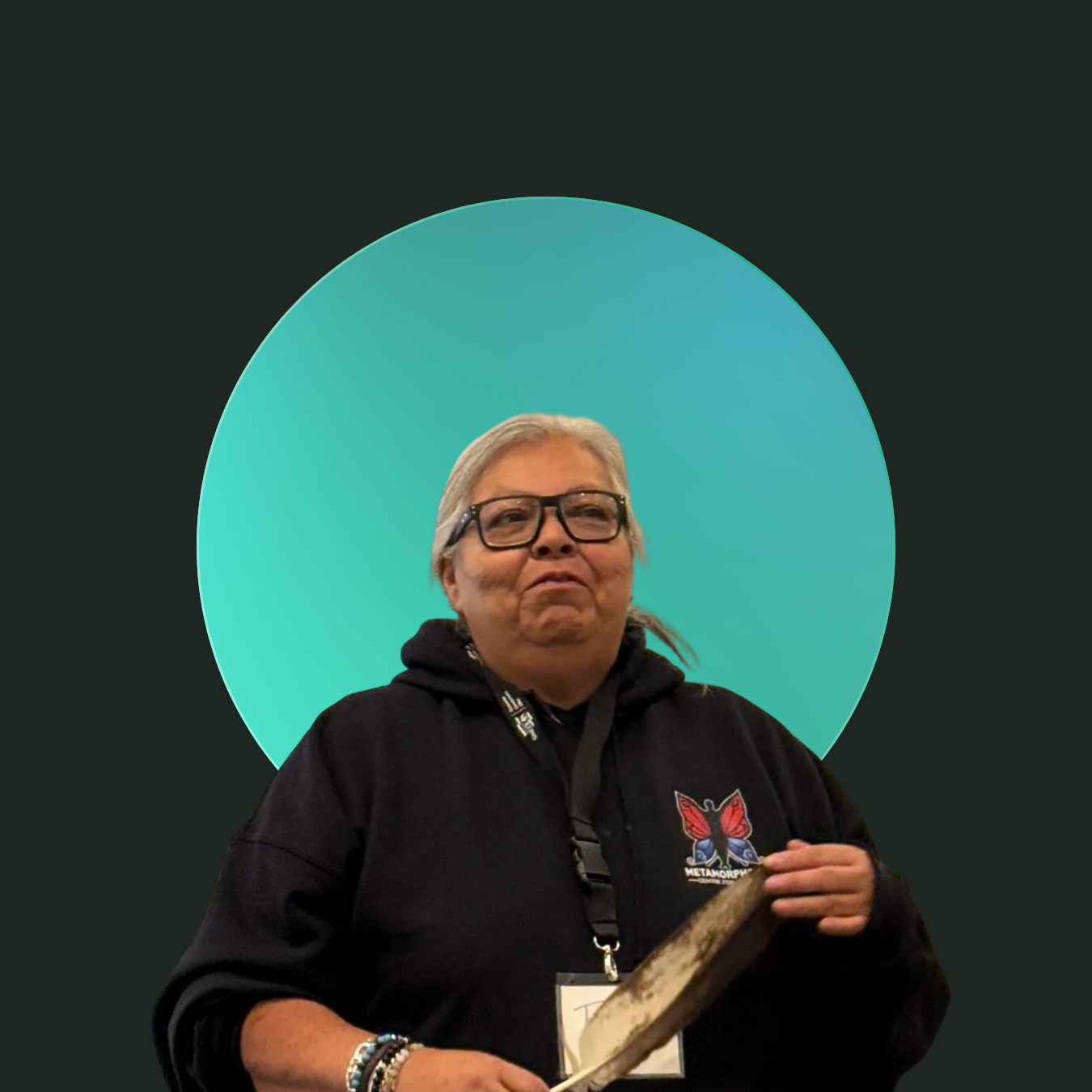
Giizhgondokwe Patrica Monague
Trish, known as Giizhgondokwe (Cedar Woman), is an Ojibway and Potawatomi Anishinaabe of the Martin Clan from Chimnissing and serves as Traditional Knowledge Carrier, Cultural Support for Anishinaabek Guardians from the 7th Fire, offering guidance through ceremony, traditional healing, and medicine-making grounded in humility, balance, and responsibility to spirit, land, and community. Giizgondokwe is from the time of the 6th Fire.
Traditional Knowledge Carrier, Cultural Support
-
Waywaynaboozhoo niindawaymognidug. Giizhgondokwe ndizhnicaz. Waabzheshi ndodem. Chimnissing ndoonjiba. Potawatomi nishnaabekwe ndow. Neezhoday midekwe ndow.
She is known as Cedar Woman, of the Martin Clan, and resides in Chimnissing. Her lineage traces back to Wisconsin, and she is Ojibway and Potawatomi. She is a second-degree Midewiwin learner and has walked the Red Road for over three decades. Her life journey includes growing up in the streets of Toronto—experiences that have deeply shaped her strength, perspective, and responsibilities.
Trish serves as the Traditional Knowledge Carrier and Cultural Support for Anishinaabek Guardians from the 7th Fire (AG7F). In this role, she supports the organization and community through a wide range of cultural responsibilities, including leading ceremony, offering traditional healing, and teaching traditional medicine-making. Her support helps ground AG7F’s work in Anishinaabek teachings, balance, and spiritual responsibility.
She carries her role as an Elder, Knowledge Keeper, and Cultural Teacher with humility and care. Her path is deeply rooted in the teachings of her ancestors, whose stories, traditions, and values have been carried across generations and continue to guide her work today.
Trish holds the knowledge shared by those who came before her as a responsibility—not only to carry it, but to pass it on. Through ceremony, storytelling, healing practices, and cultural teachings, she works to ensure that Indigenous ways of knowing, language, and relationships to land and spirit are remembered, respected, and carried forward by future generations.
With a humble heart, she offers what she has learned in the hope that it strengthens communities, fosters understanding, and reminds us of the importance of living in balance—connected to spirit, to the land, to one another, and to all our relations.
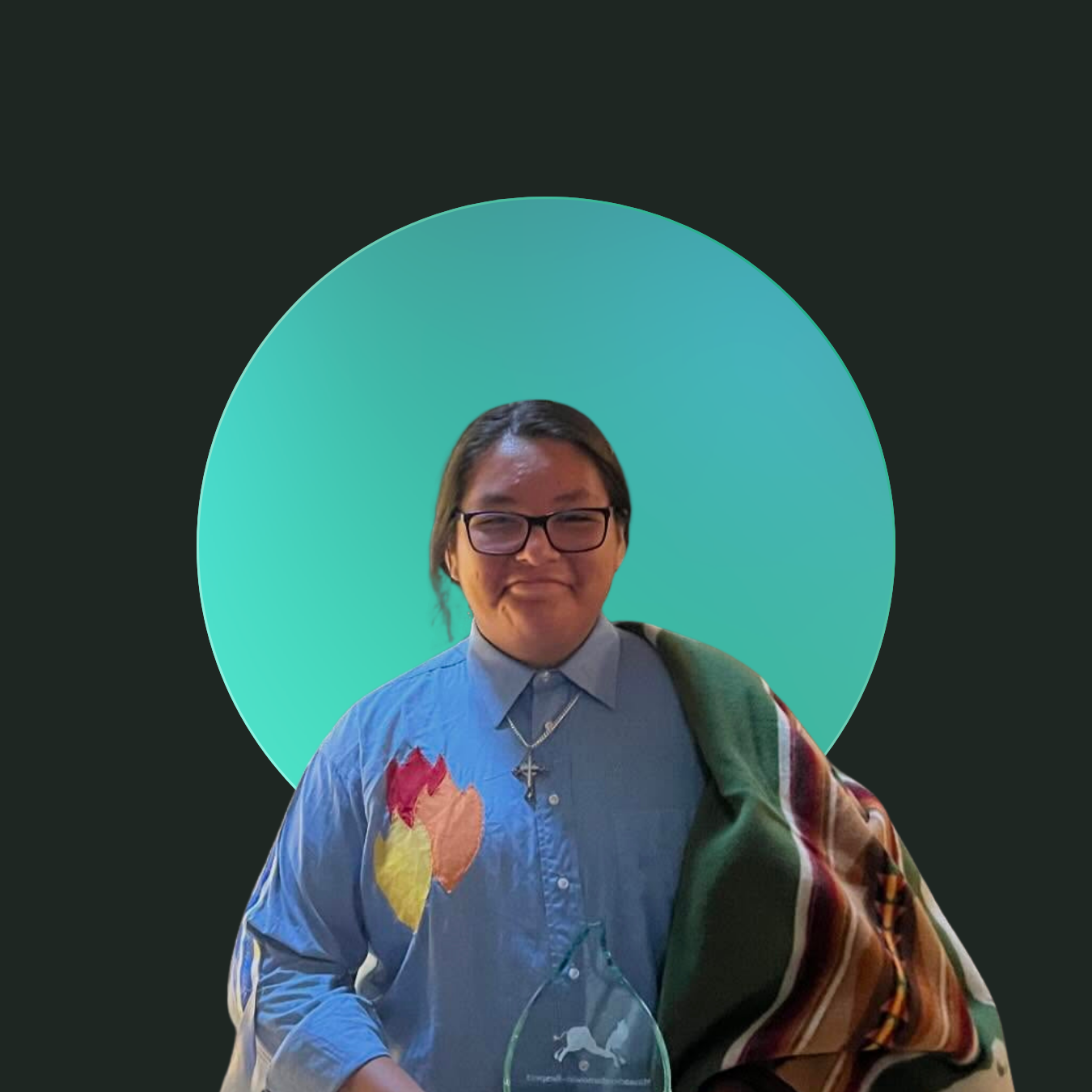
Niiwo’noodin Kai Butler
Oshkaabewis, Cultural Support
Niiwo’noodin Kai Butler is an Anishinaabe youth and first-degree Midewiwin learner who serves as Oshkaabewis, Cultural Support for Anishinaabek Guardians from the 7th Fire, assisting gatherings and programs through firekeeping, smudging, and cultural duties, while continuing his learning as a drummer, firekeeper, and student committed to walking the good road. Niiwo’noodin is from the time of the 7th Fire,
-
Niiwo’Noodin Kai Butler serves as Oshkaabewis and Cultural Support for Anishinaabek Guardians from the 7th Fire (AG7F). In this role, he supports AG7F gatherings, events, and programs through firekeeping, smudging, and other cultural responsibilities that help ground the work in Anishinaabek teachings, respect, and balance.
Kai is a first-degree Midewiwin learner and a student at Georgian Bay District Secondary School. He is a drummer, firekeeper, and lifelong learner of the Anishinaabe way of life. His cultural work is guided by humility, kindness, and a strong sense of responsibility to community.
After spending much of the pandemic years focused on personal healing and care, Kai made the decision to re-engage with school and community life on his own terms. Through programs such as Right To Play, and through mentorship and ceremony, he has continued to grow into his responsibilities—supporting youth, Elders, and community members at cultural, language, and arts gatherings.
Kai is deeply committed to walking the good road. He takes pride in who he is as an Anishinaabe youth and is dedicated to learning, singing, dancing, and carrying his culture forward in a good way. His presence within AG7F reflects the importance of creating space for young people to step into their spirit work with care, patience, and support.
AG7F
brings together Indigenous and non-Indigenous peoples in intergenerational relationship, grounded in Anishinaabe teachings and responsibility to land, people, and future generations.
Our collective strength lies in deep cultural knowledge, youth leadership with real responsibility, and the ability to work across community, cultural, and environmental spaces without compromising Indigenous ways of knowing.
Guided by humility and accountability, we prioritize how work is carried out as much as the outcomes it produces, supporting stewardship that is relational, enduring, and rooted in care.

This work is carried forward in relationship
with Elders, youth, knowledge holders, community members, and partners who may not be listed here, but whose guidance, care, and presence shape everything we do.
Our team supports work that is rooted in land, culture, and community.
Learn how this work takes shape.